Laravel application development is the process of designing, building, deploying, and supporting web-based software on the Laravel PHP framework. For a business, the important word is not framework—it is application. The investment must turn a real workflow, customer need, or product opportunity into software that remains secure, understandable, and dependable after launch.
Laravel can support a focused internal tool, a customer-facing portal, a subscription product, or a platform coordinating several external systems. It is equally useful when replacing a fragile legacy application or extending an established Laravel codebase. The framework supplies productive conventions; experienced engineering determines whether the resulting system protects data, handles failure, scales sensibly, and can be owned for years.
This guide helps business and technical leaders evaluate the whole lifecycle. If you are deciding whether the business needs operational software at all, start with the broader guide to custom web application development. If you are comparing an informational website with operational software specifically in Laravel, read the distinction between Laravel web design and Laravel web application development.
What Is Laravel Application Development?
Laravel is an open-source PHP framework with conventions for routing, controllers, database access, validation, authentication, authorization, background work, events, notifications, caching, testing, and command-line tooling. It reduces the amount of undifferentiated plumbing a team must invent, while leaving room to model proprietary business rules.
A complete engagement extends well beyond writing PHP. It includes discovery, workflow design, user experience, architecture, data modeling, integration contracts, security, automated tests, cloud infrastructure, deployment, monitoring, documentation, and maintenance. These responsibilities are why a production application should be evaluated as an operating system for part of the business—not merely as a collection of screens.
Laravel is opinionated enough to give developers shared patterns but flexible enough to support server-rendered applications, reactive interfaces, JSON APIs, mobile backends, and integrations. That balance makes Laravel web application development a practical choice for organizations that want custom behavior without maintaining a proprietary framework.
When Is Laravel a Good Fit for a Business Application?
Laravel is a strong fit when users need secure accounts, structured data, custom permissions, multi-step workflows, calculations, integrations, reporting, or administrative tools. It works especially well when the software’s value comes from coordinating people and systems around rules that packaged software cannot represent cleanly.
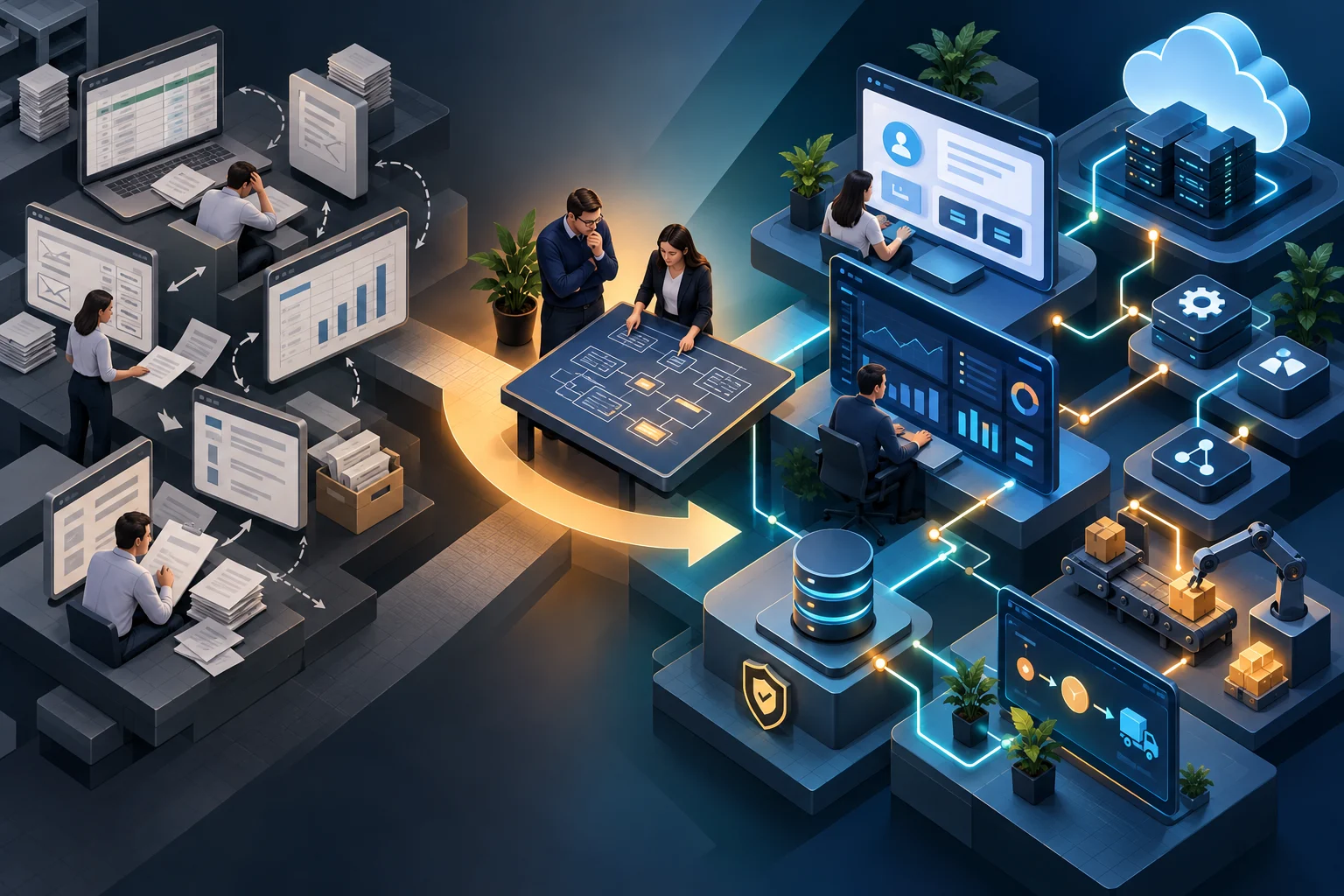
Good candidates include a business replacing spreadsheet-and-email operations, launching a web product, exposing self-service to customers, connecting a CRM to specialized fulfillment, or modernizing a PHP system that still contains valuable logic. An existing Laravel platform can also be expanded module by module when its architecture and production behavior are understood first. The companion article on why businesses choose Laravel web application development examines the framework and ownership advantages in more detail.
Laravel is not automatically the right answer for every website. A straightforward brochure site, standard blog, or common ecommerce catalog may be faster and less expensive in a managed platform. Extremely specialized real-time, embedded, or computation-heavy workloads may require other technologies around the Laravel application. The decision should follow the application’s constraints, not framework enthusiasm.
What Businesses Can Build With Laravel
Practical Laravel applications span customer products and internal operations:
- SaaS platforms: subscriptions, organizations, teams, entitlements, usage controls, administration, and tenant-aware data.
- Customer and partner portals: secure documents, orders, service requests, account settings, approvals, and status visibility.
- Internal business systems: quoting, case management, inventory, vendor coordination, compliance records, and operational administration.
- Ecommerce applications: specialized catalogs, pricing, checkout, subscriptions, fulfillment, returns, and customer service workflows.
- Workflow automation: intake, validation, routing, approvals, notifications, reconciliation, exception handling, and audit history.
- Dashboards and reporting: governed metrics, role-specific actions, exports, and traceability to authoritative records.
- API platforms: stable services for mobile apps, partner systems, devices, and internal applications.
- Booking systems: availability, capacity, resources, payments, reminders, cancellations, and calendar integrations.
- Content platforms: proprietary publishing structures, review workflows, access models, search, and distribution.
- AI-integrated applications: assisted search, extraction, classification, summarization, drafting, recommendations, and controlled automation.
The best first release normally completes one valuable workflow end to end. A narrow system that users trust creates a better foundation than a broad feature list with unresolved data ownership and failure paths.
Custom Laravel Applications Versus Packaged Software
Packaged software is usually the right starting point when the requirement is common and adapting the business to the product is acceptable. It offers faster implementation, vendor-managed core infrastructure, and predictable standard features. The tradeoff is that the vendor controls the roadmap, data model, integration limits, pricing, and supported workflow.
Custom Laravel application development becomes reasonable when the workflow differentiates the business, disconnected tools create recurring cost, customers require a specialized experience, or proprietary data and rules cannot be represented safely through configuration. The organization gains control of its code, priorities, and integration strategy, but it also accepts responsibility for maintenance and production operation.
| Decision | Packaged software | Custom Laravel application |
|---|---|---|
| Workflow fit | Best for standard processes | Models proprietary rules and exceptions |
| Launch | Often faster initially | Requires discovery and engineering |
| Integration | Limited to vendor capabilities | Designed around required contracts |
| Control | Vendor owns roadmap | Business sets priorities and owns code |
| Ownership cost | Subscription and adaptation | Development, infrastructure, and maintenance |
A hybrid is often best: retain a reliable CRM, accounting product, or content system, then let Laravel coordinate the specialized workflow between them. Our dedicated guide to custom Laravel development provides a fuller build-versus-buy decision framework.
Typical Laravel Application Architecture
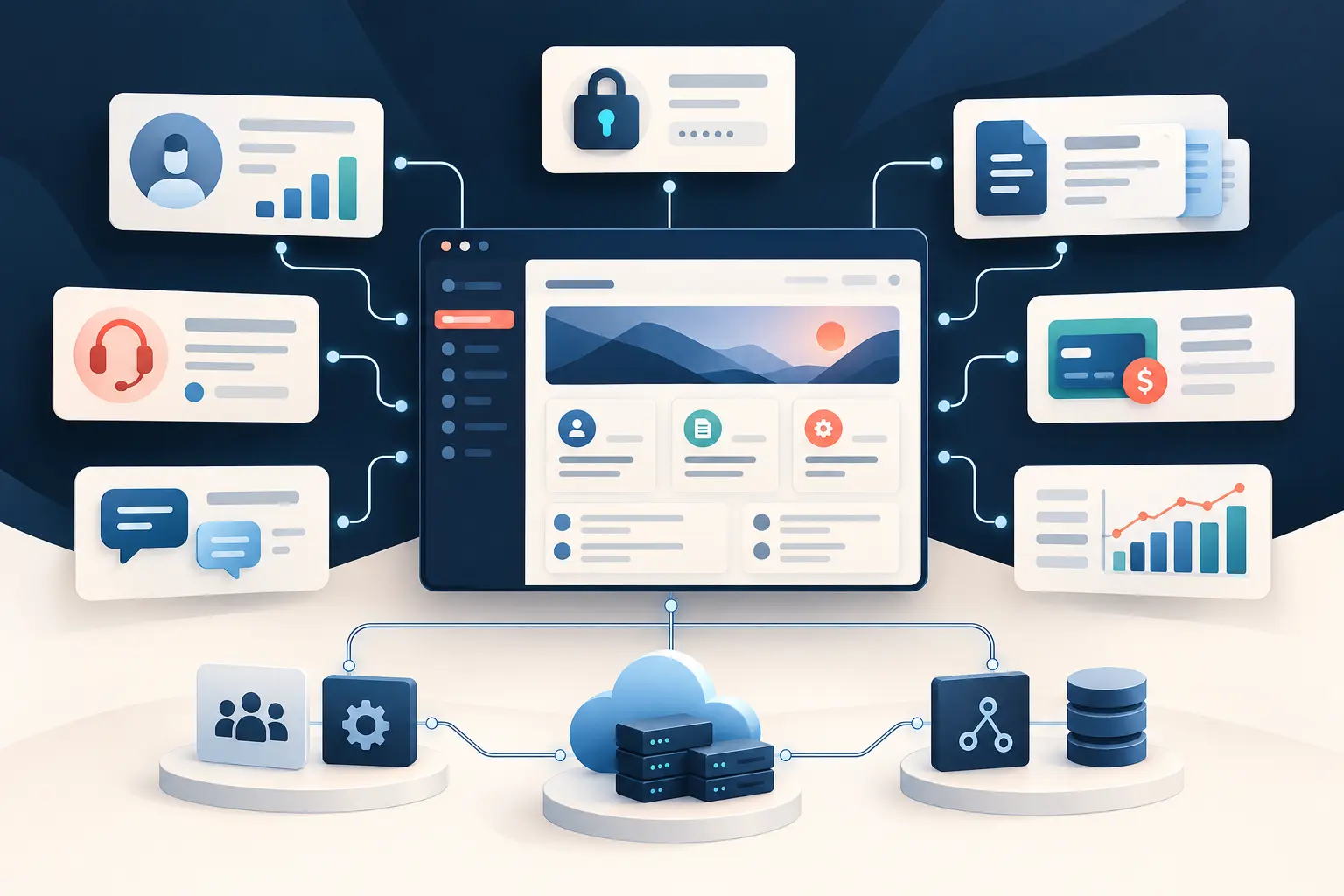
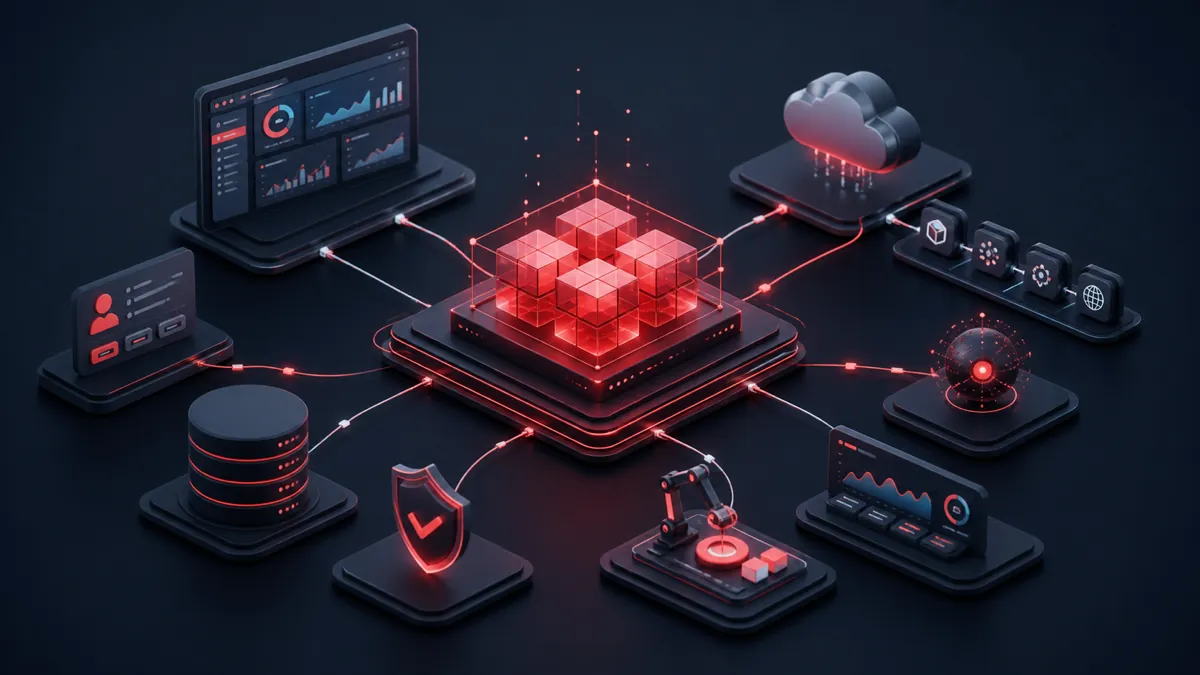
A maintainable Laravel application separates interface concerns from business rules and infrastructure. HTTP routes receive requests; middleware enforces cross-cutting controls; controllers coordinate use cases; validation objects define acceptable input; policies enforce authorization; services or actions express meaningful operations; models represent data; and events or processing components handle side effects.
This is a set of responsibilities, not a requirement to create a class for every line. A focused application can remain a well-structured monolith for a long time. A modular monolith keeps deployment and transactions straightforward while defining boundaries that allow valuable domains to evolve independently. Microservices introduce network failures, distributed data, more deployments, and greater operational cost; they should solve measured constraints rather than signal sophistication.
Frontend choices should also follow the product. Blade and progressive JavaScript are effective for many portals and business systems. Livewire can provide interactive server-driven interfaces. Vue or React may suit highly interactive products or teams already organized around a separate frontend. The architecture should make releases, debugging, accessibility, and long-term staffing easier.
APIs and Third-Party Integrations
Laravel applications commonly connect payments, accounting, CRM, email, social platforms, shipping, identity providers, cloud storage, analytics, and internal services. The easy demonstration is a successful API request. Production engineering covers everything around it: protected credentials, timeouts, rate limits, provider errors, bounded retries, duplicate events, partial success, logging, and reconciliation.
Incoming webhooks should verify signatures, resist replay, validate payloads, and be idempotent so the same provider event cannot charge, ship, or update twice. Outbound operations need a durable record of intent and outcome when business state depends on another system. Administrators need visibility into failures and a safe way to recover.
When Laravel provides the API, stable resources, explicit versioning decisions, server-side authorization, pagination, consistent errors, rate limits, and contract tests protect mobile clients and partners. Integration ownership should be documented: which system is authoritative, how corrections propagate, and what happens when one side is unavailable.
Authentication, Permissions, and Tenant Boundaries
Authentication establishes identity; authorization decides what that identity may do. Laravel supports session-based login, password reset, email verification, API tokens, policies, and gates, but each application still needs an explicit access model. Roles such as “admin” and “user” are rarely enough once organizations, departments, projects, delegated access, or sensitive records are involved.
Permission checks belong on the server for every protected action. Hiding a button is a user-interface convenience, not security. High-risk actions may require recent re-authentication, multi-factor authentication, approval by a second role, and an audit record. Support impersonation and administrative access should be tightly scoped and visible.
Multi-tenant SaaS platforms need clear rules for data separation. Queries, jobs, caches, files, exports, and logs can all leak data if tenant context is assumed rather than enforced. Tests should prove that one account cannot read or change another account’s records.
Queues, Long-Running Work, and Reliable Automation
Users should not wait inside a browser request while an application generates a large export, processes media, calls several providers, or analyzes a document. Laravel can represent this work as jobs with clear inputs, retry rules, timeouts, and failure handling. In environments with managed queue consumers, those jobs can run asynchronously with backlog and failure monitoring.
Some self-contained deployments do not use persistent Laravel queue workers. In that model, authenticated application actions can start bounded detached server-side processes, or external providers can call secure webhooks when work completes. The architecture must match the operating environment; core functionality should never quietly depend on a worker nobody runs.
Whatever execution model is chosen, long-running operations must be idempotent, observable, and recoverable. Store status, prevent duplicate work, cap resource use, expose useful errors, and distinguish automatic retry from a problem requiring human review. Application-driven events and external triggers can support automation without assuming Laravel’s scheduler.
Database Design, Data Migration, and Performance
The database is where many application promises become enforceable. A sound design defines record meaning, relationships, uniqueness, valid states, indexes, transaction boundaries, retention, and deletion behavior. Eloquent improves developer productivity, but business integrity should not depend only on interface validation.
MySQL and PostgreSQL both serve Laravel applications well. Selection should consider existing systems, query patterns, team expertise, extensions, and hosting. Performance work begins with representative data, slow-query evidence, and query plans. Eager loading can prevent N+1 queries; pagination limits result sizes; deliberate indexes improve important filters while adding write cost that should be understood.
Replacing an existing system makes data migration a product feature. Teams should inventory sources, map fields and identifiers, resolve duplicates, rehearse transformations, validate totals, preserve audit needs, and plan cutover and rollback. A technically successful import that changes record meaning is still a failed migration.
AI Integrations in Laravel Applications
Laravel is well suited to putting deterministic business controls around probabilistic AI services. The application can manage accounts, permissions, source documents, prompts, provider configuration, usage budgets, review states, billing, and audit history while an AI provider performs extraction, classification, semantic search, summarization, drafting, or recommendation.
AI output should be treated as untrusted external input. Validate structured responses, escape displayed content, restrict tool access, minimize sensitive data, set cost and time limits, and define fallbacks when a provider is slow or unavailable. High-consequence financial, legal, destructive, or customer-facing actions should remain behind server-side rules or human approval.
AI-assisted development can accelerate scaffolding, tests, investigation, and documentation. It does not transfer responsibility for architecture, security, database changes, or releases. The goal is useful leverage with review, not faster production of unowned code.
Testing and Production Quality
Tests protect behavior that matters when the application changes. Unit tests suit isolated calculations and rules. Feature tests exercise routes, middleware, policies, database effects, and responses. Contract tests protect APIs and provider boundaries. A small set of browser tests can cover critical journeys such as registration, checkout, booking, or approval.
Coverage percentage alone is not a quality strategy. Prioritize permissions, tenant isolation, money, destructive actions, state transitions, data migration, webhook duplication, integration failure, and recovery. Tests should accompany features while their intended behavior is clear, then run in a repeatable environment before deployment.
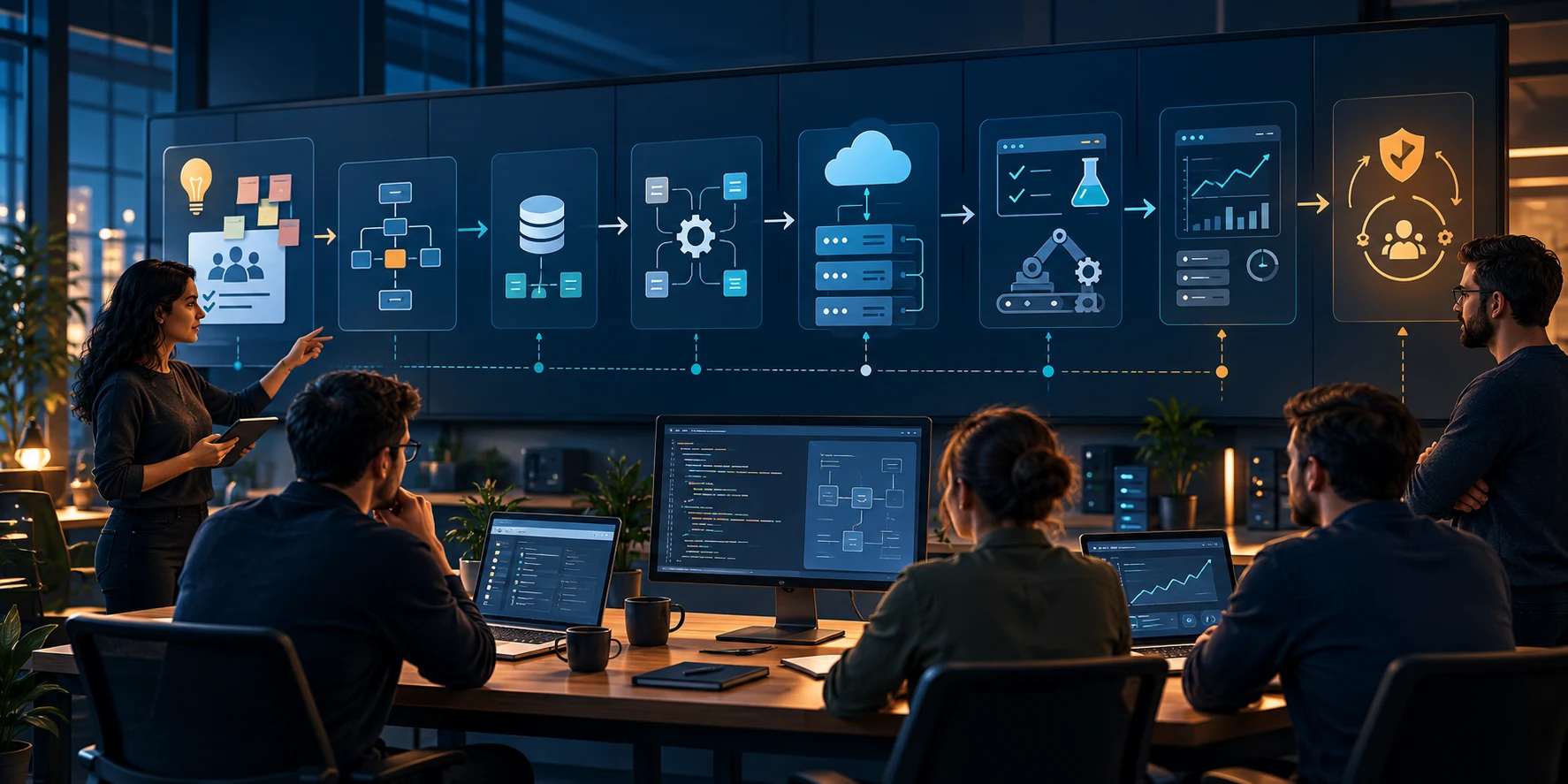
Quality also includes code review, static analysis, formatting, dependency control, accessible interfaces, useful logs, and documentation of unusual decisions. The detailed Laravel development process from idea to production shows how these practices fit across delivery stages.
Security for a Laravel Business Application
Laravel provides secure defaults and tools for password hashing, CSRF protection, parameterized queries, validation, encryption, sessions, and authorization. Developers must still apply them consistently and configure production correctly. Every application should identify sensitive data, trust boundaries, likely abuse, compliance obligations, and the impact of compromised credentials.
Practical controls include least-privilege database and cloud identities, secrets outside source control, dependency updates, secure cookies, rate limiting, validated uploads, protected administrative routes, encrypted transport, backup protection, and server-side authorization. Logs should support investigation without recording passwords, tokens, or unnecessary personal data.
Security is continuous. Threats, dependencies, integrations, and business behavior change after launch. Patch management, access reviews, incident procedures, and tested restoration belong in the ownership plan.
AWS, Cloud Deployment, and CI/CD
A production application may need compute, a managed database, object storage, email delivery, SSL, DNS, secrets, logs, backups, and alerts. AWS can provide those capabilities, but the best design is the smallest architecture that meets availability, recovery, security, and growth requirements. A well-sized server and managed database can be more reliable than a distributed platform the team cannot operate.
CI/CD should turn a reviewed change into a known artifact through repeatable checks. A pipeline can install locked dependencies, run formatting and static analysis, execute tests, build frontend assets, and deploy consistently. Releases must account for backward-compatible database changes, configuration, health checks, cache behavior, long-running processes where used, rollback, and recovery.
Infrastructure should be documented and access should belong appropriately to the client. For the operational layer, see AWS and Laravel DevOps services.
Monitoring, Maintenance, and Long-Term Ownership
Monitoring should answer both technical and business questions. Exceptions, response time, slow queries, resource pressure, storage, provider health, and long-running work reveal technical failure. Alerts for incomplete payments, missing imports, delayed notifications, or unreconciled records reveal whether the application is fulfilling its purpose.
After launch, ownership includes framework and dependency upgrades, security patches, bug diagnosis, performance work, provider changes, backup verification, production incidents, and continued feature development. Response expectations, deployment authority, environment access, and monitoring responsibility should be explicit.
A responsible takeover begins with an assessment rather than immediate refactoring. Preserve working value, add evidence around fragile areas, and improve in focused stages. Our guide to Laravel maintenance and support in 2026 covers this lifecycle in detail.
Laravel Development Cost and Timeline
Cost depends on workflows, roles, interface complexity, integrations, API contracts, data migration, security, infrastructure, tests, and production responsibility. A focused internal application may require a modest first phase; a multi-tenant SaaS product or legacy replacement can require staged investment across discovery, implementation, migration, and stabilization. Compare proposals by complete outcomes, not hourly rates alone.
Timelines are shaped by the same factors plus decision speed and uncertainty. A focused portal might take weeks, while a production SaaS platform or complex modernization can take several months and multiple releases. Discovery should define a usable first release, expose risky integrations early, and state what is deferred.
For current ranges and engagement models, read how much Laravel development costs in 2026. For planning ranges by project type, see how long it takes to build a Laravel application.
Choosing a Laravel Application Developer or Company
A qualified Laravel application developer should be able to discuss business rules, data integrity, permissions, integration failure, testing, deployment, and monitoring—not only framework packages. Ask for specific examples of production decisions, incidents, recovery, and the tradeoffs behind an architecture.
A Laravel development company should define who owns discovery, product decisions, frontend work, infrastructure, releases, documentation, and post-launch support. Confirm repository access, account ownership, communication cadence, acceptance criteria, change control, and how another qualified team could take over. Avoid proposals that promise certainty before inspecting an inherited application or understanding external dependencies.
Use the detailed guide to choosing a Laravel development company when comparing partners. The overview of Laravel application development services explains what a complete engagement can include.
A Practical Evaluation Checklist
- Can the business name the user, recurring problem, desired outcome, and owner?
- Is custom behavior creating enough value to justify software ownership?
- Which system owns each important record, and what data must be migrated?
- What roles, tenant boundaries, approvals, and audit requirements exist?
- Which integrations are critical, and how will failures be reconciled?
- What availability, recovery, security, and compliance obligations apply?
- How will tests, deployments, monitoring, and maintenance be handled?
- Does the first release solve one valuable workflow end to end?
- Will the business own the repository, accounts, data, and documentation?
If these answers are still uncertain, start with a technical discovery phase rather than a full-build commitment. Good discovery produces prioritized workflows, architecture assumptions, a risk register, release boundaries, and a more credible estimate.
Frequently Asked Questions
What is Laravel application development?
It is the complete process of designing, building, testing, deploying, and maintaining a web application with Laravel, including its workflows, data, integrations, security, and infrastructure.
What applications can Laravel build?
Laravel can support SaaS products, customer portals, internal systems, ecommerce, workflow automation, dashboards, APIs, booking systems, content platforms, and AI-integrated applications.
Is Laravel suitable for enterprise or growing businesses?
Yes, when the architecture, database, security, infrastructure, and operating model are designed for the actual workload. Laravel can begin simply and scale from production evidence.
Can Laravel replace an existing business system?
Yes. A safe replacement inventories existing behavior, maps and rehearses data migration, delivers in stages where possible, and includes cutover, validation, and recovery plans.
How much does Laravel application development cost?
Cost depends on workflows, interfaces, roles, integrations, data, migration, infrastructure, security, tests, and support. A technical assessment is normally needed for a reliable estimate.
How long does a Laravel application take to build?
A focused application may take weeks, while a complex SaaS platform or legacy replacement often takes several months across staged releases. Scope and uncertainty matter more than screen count.
Plan a Laravel Application Built for Production
Custom PHP Design provides Laravel application development services for businesses planning new platforms, modernizing legacy systems, expanding existing Laravel applications, integrating APIs or AI, and improving AWS delivery and ongoing support.
The objective is durable ownership: clear architecture, protected data, useful tests, controlled deployments, visible failures, and a codebase another capable developer can understand. If you need help turning a business requirement or inherited system into a practical technical plan, start with the workflow, constraints, and production responsibilities that matter most.