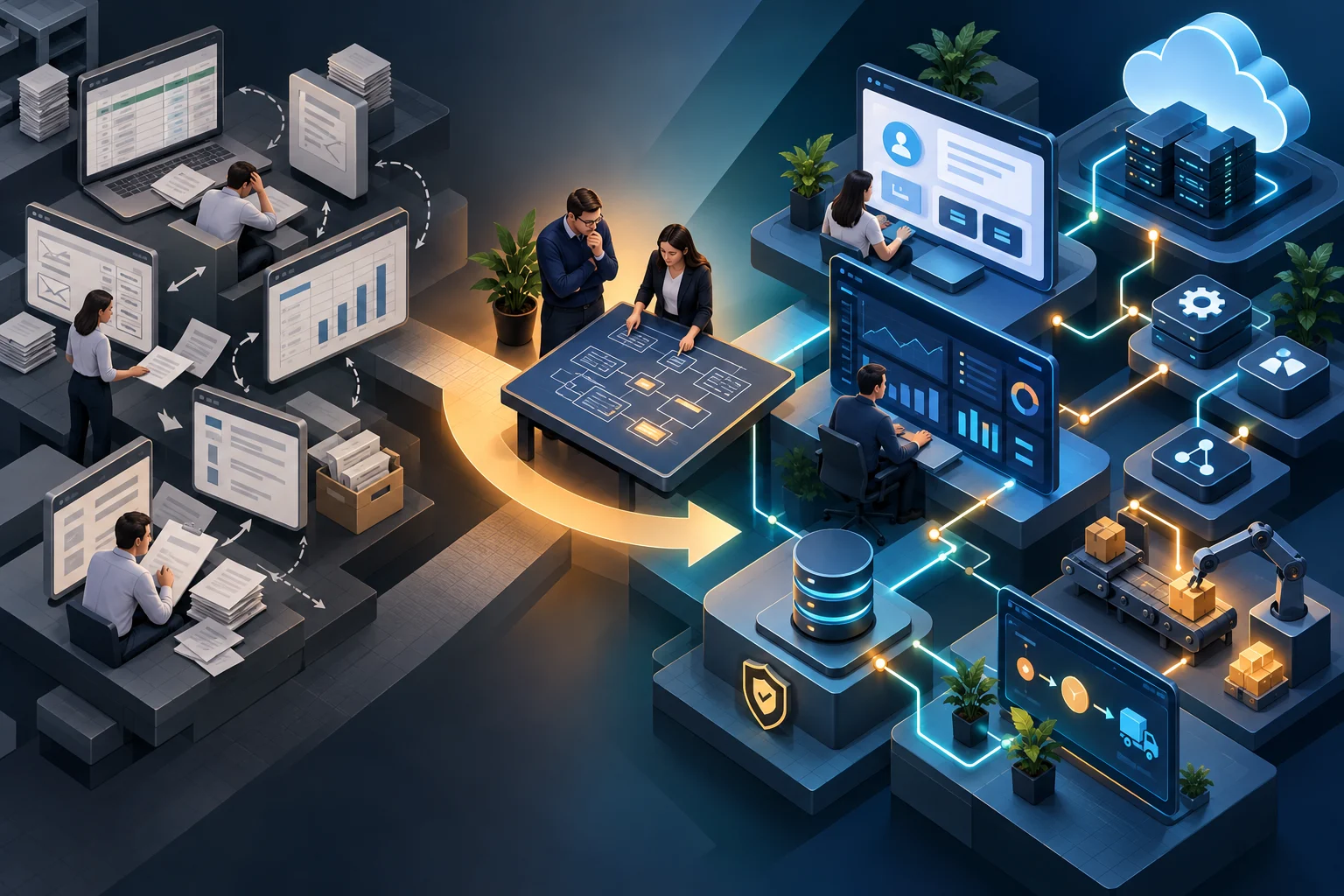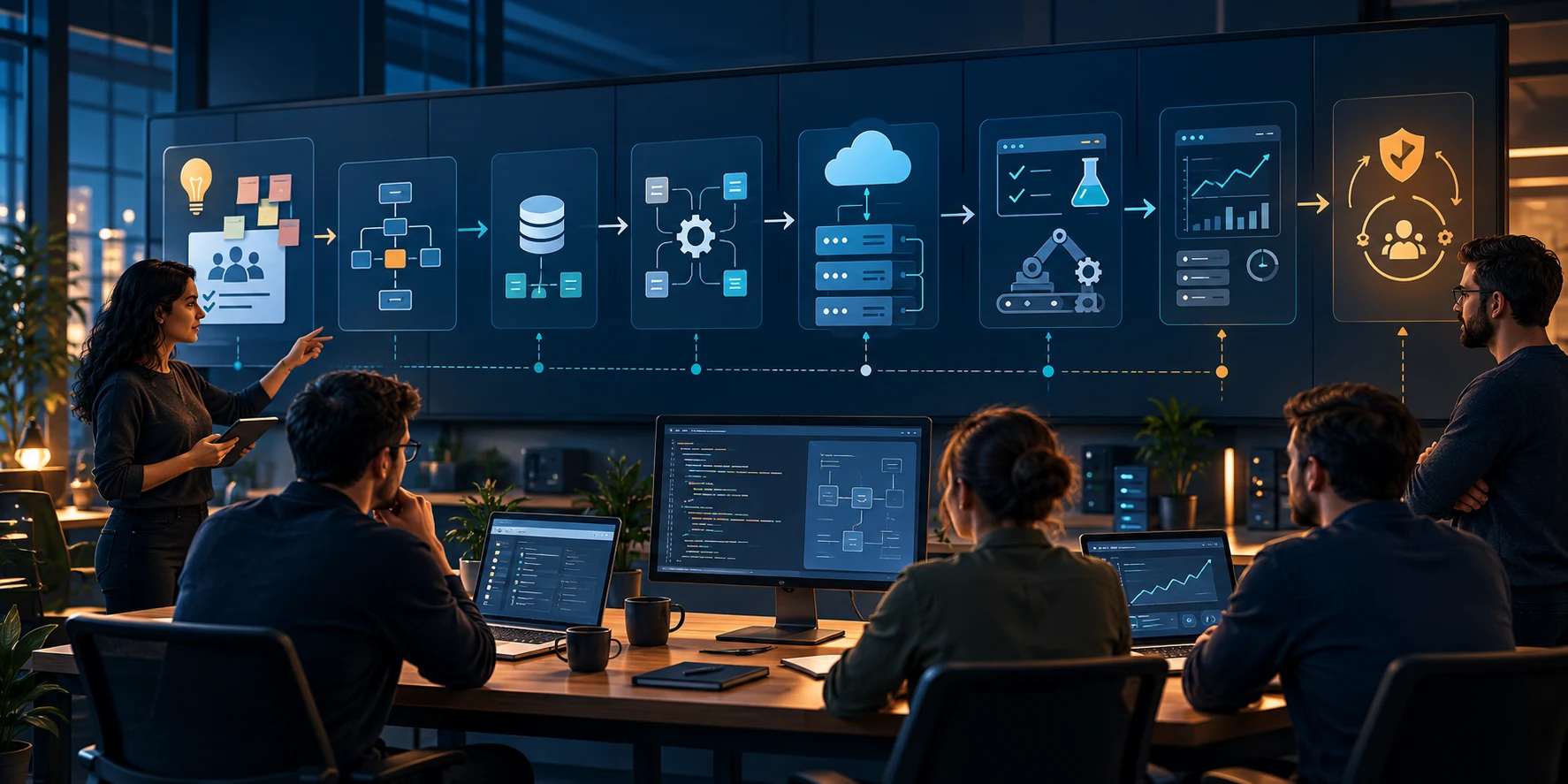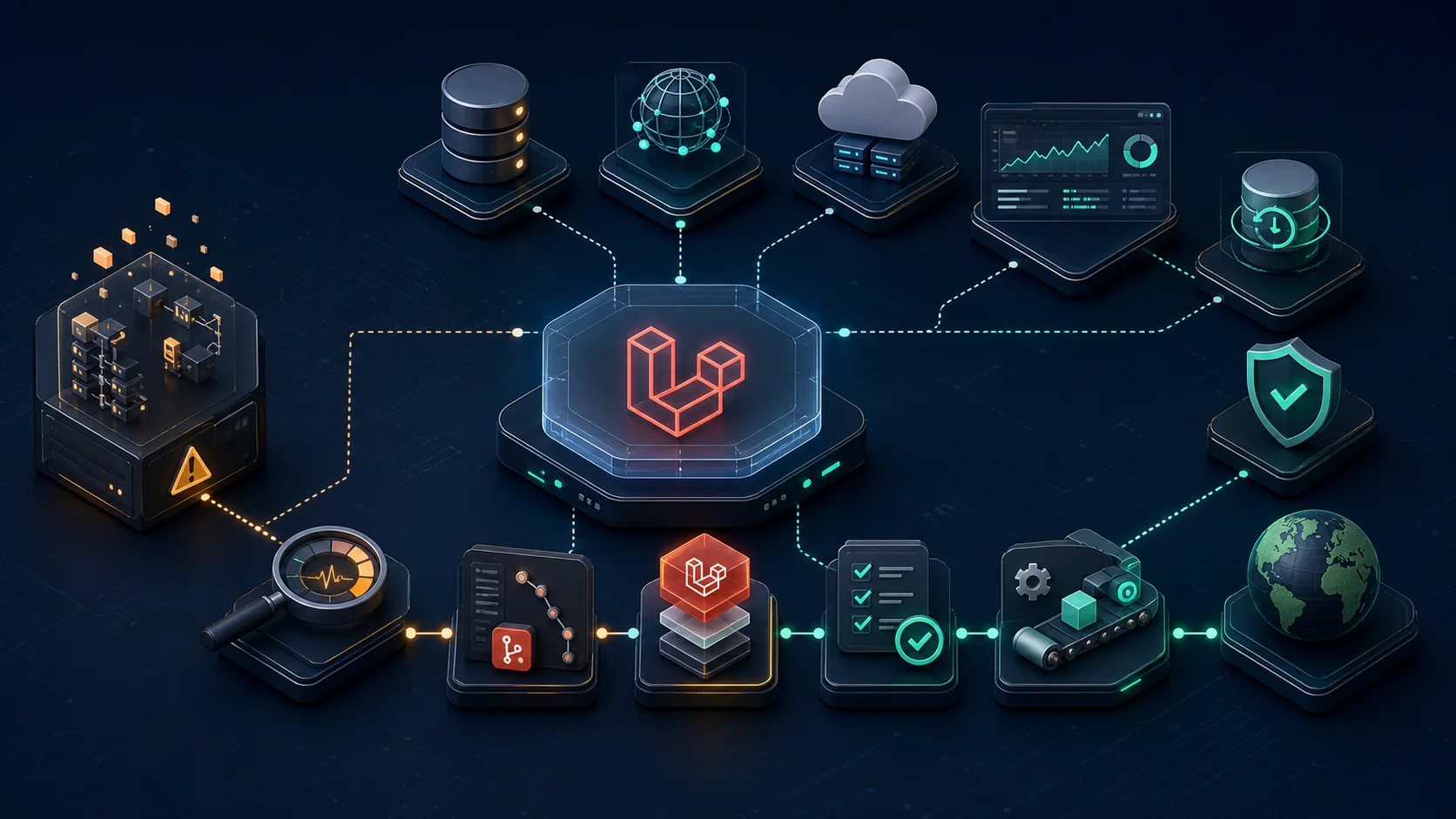
A production Laravel application is not maintained by running composer update once a year. It is maintained by understanding how code, data, integrations, infrastructure, releases, and business operations fit together—and by having someone accountable when one of those parts changes or fails.
Businesses often begin looking for Laravel maintenance and support after continuity has already broken. The original developer disappeared. An agency relationship ended. Releases became stressful. Bugs accumulated while the framework and PHP runtime fell behind. The application still creates value, but nobody is confident enough to own it.
That situation does not automatically call for a rewrite. It calls for a disciplined assessment, a stabilization plan, and an experienced Laravel developer for an existing application. This guide explains what responsible support should include in 2026, how a technical takeover should work, and how to decide between maintenance, modernization, and rebuilding. For broader framework context, see our Laravel development guide for 2026 and overview of professional Laravel development services.
What Laravel maintenance actually includes
Laravel application maintenance is the ongoing work required to keep a business system secure, dependable, understandable, and capable of change. The codebase matters, but production reliability crosses several layers.
Application monitoring, logging, and incident response
A support partner should be able to answer basic operational questions: Are requests failing? Which endpoints are slow? Are customers affected? When did the behavior start? Application logs, exception tracking, infrastructure metrics, health checks, and useful alerts create that visibility. Logs should include enough context to investigate an event without recording passwords, tokens, or sensitive customer data.
Monitoring only helps when somebody owns the response. An alert needs a severity, an escalation path, and a way to distinguish an isolated warning from an active business incident. Repeated exceptions should become fixes or operational improvements, not permanent background noise.
Bug investigation and durable fixes
Good Laravel bug fixes begin with reproduction and evidence. A developer traces the request, relevant records, log entries, recent releases, integration responses, and environment differences. The goal is to identify the cause rather than patch the visible symptom.
For example, a duplicate invoice may look like a controller problem but actually result from a retried webhook without an idempotency check. Restarting a failed process might clear the immediate issue while preserving the defect. A durable fix handles the repeated event safely, adds a regression test, and improves logging so support can verify the outcome.
Framework, PHP, and Composer dependency management
Laravel upgrade services cover more than changing a version constraint. Framework upgrades can affect authentication, middleware, filesystem behavior, queues, mail, caching, configuration, and community packages. PHP upgrades may expose deprecated behavior or stricter type handling. Composer packages can introduce their own compatibility and security constraints.
Updates should be reviewed in a representative environment, supported by automated and targeted manual testing, and released through a controlled deployment. The dependency lock file belongs in source control so production receives the versions that were actually verified.
Database maintenance, backups, and recovery
Database care includes query performance, indexes, storage growth, connection health, integrity constraints, safe migrations, retention, and recovery planning. Backups must be encrypted, retained appropriately, and tested through restoration. A dashboard that says “backup successful” is not proof that the business can recover usable data.
Schema changes deserve particular care on large production tables. A migration that completes instantly on a developer laptop may lock a populated table or exceed a deployment window. Maintenance planning should account for data volume, backwards compatibility, rollout order, and rollback limitations.
Queues, scheduled work, APIs, and webhooks
Many business failures happen outside a normal web request. Emails stop sending, imports stall, scheduled reports disappear, or a payment webhook fails after a vendor changes its payload. Whether the application uses managed workers, cron, external triggers, or application-started processes, each recurring and deferred task needs observable execution, failure handling, retry rules, and ownership.
Third-party integrations require token management, timeout handling, rate-limit awareness, signature verification, idempotency, and a response to vendor deprecations. Reliable Laravel application support includes watching those boundaries instead of waiting for customers to discover that data stopped moving.
Infrastructure, deployment, security, and performance
The application may depend on Linux configuration, a web server, PHP-FPM, containers, DNS, certificates, a load balancer, object storage, email delivery, database services, and cloud permissions. AWS and Laravel DevOps support connects these layers with repeatable CI/CD, documented configuration, monitoring, and recovery procedures.
Laravel security updates include framework and package advisories, but application security also depends on authorization, input validation, session behavior, secrets, file handling, exposed endpoints, audit trails, and least-privilege infrastructure access. Performance work similarly starts with evidence. Our guide to PHP performance bottlenecks and fixes explains how query traces, profiling, and infrastructure metrics prevent guesswork.
Taking over an existing Laravel application
A responsible takeover starts by learning what the system does today. The first objective is not to impose a preferred architecture. It is to preserve working business behavior, identify immediate risk, and create enough visibility to make safe decisions.
Secure access and establish a working inventory
The new owner needs the repository, deployment system, hosting and cloud accounts, DNS, database access, monitoring, error tracking, storage, email provider, third-party portals, and relevant documentation. Access should use named accounts and least privilege. Shared credentials should be rotated through an agreed process after all dependencies are understood—not impulsively in a way that breaks production.
The Git history can reveal why unusual code exists, which modules change frequently, and where previous regressions occurred. The developer should confirm the active branch and deployment source rather than assume the repository matches production.
Assess the application and runtime
The assessment should record Laravel and PHP versions, Composer dependencies, frontend build dependencies, environment configuration, cache and session drivers, storage, mail, authentication, authorization, database schema, data volume, and migrations. It should map service providers, middleware, commands, event listeners, queues, recurring processes, APIs, webhooks, and external credentials.
Configuration differences across local, staging, and production environments often explain “works on my machine” failures. Secrets should never be copied into documentation, but their purpose, owner, rotation method, and consuming service should be known.
Inspect how production is operated
The developer should trace the deployment pipeline from commit to production: tests, builds, artifacts, database changes, health checks, release strategy, and rollback. AWS or other cloud infrastructure must be inventoried, including networks, compute, databases, storage, IAM permissions, logging, alarms, and any resources created manually.
Logs, recent incidents, support tickets, and monitoring history show how the application fails in practice. Backup schedules and retention should be verified, followed by a safe restore test. Automated tests should be run and evaluated for what they protect; a green suite with five superficial tests offers little assurance.
Produce a prioritized stabilization plan
The output should separate urgent production risks, short-term stabilization, planned modernization, and optional improvement. A useful plan explains impact, evidence, dependencies, and how each change will be verified. It may prioritize an expiring certificate, broken backup, or exposed admin route ahead of a framework upgrade that is important but not immediately dangerous.
This mirrors the discipline in a sound Laravel development process from idea to production: understand requirements and operating constraints before making consequential changes.
Warning signs your Laravel application needs maintenance
Maintenance debt becomes visible through recurring operational patterns. One symptom may be manageable; several together usually indicate that the application lacks active technical ownership.
- Deployments regularly break. Releases depend on undocumented commands, direct server edits, or one person’s memory.
- Pages and API requests keep slowing down. Response time rises with data volume, but nobody profiles queries, external calls, cache behavior, or resource limits.
- Queues or recurring processes silently fail. Work accumulates or stops, yet no alert connects the failure to a business workflow.
- Laravel or PHP is several versions behind. Package compatibility narrows and each future upgrade becomes more complicated.
- Developers fear particular modules. Important billing, permissions, or reporting code has no tests and unclear side effects.
- Production fixes are manual. Files, records, or configuration are changed directly without review, traceability, or a repeatable release.
- No reliable staging environment exists. Integration and deployment behavior is first tested against customers and production data.
- Infrastructure is undocumented. Nobody knows why a server, firewall rule, storage bucket, or scheduled process exists.
- Recurring bugs keep returning. Symptoms are patched without regression tests or root-cause analysis.
- Vendor changes break integrations. API versions, webhook contracts, expiring tokens, and deprecations are not actively monitored.
These are not arguments for panic. They are signals to reduce uncertainty methodically. A focused production assessment usually creates more value than beginning a broad cleanup without knowing which risks affect customers or revenue.
Why Laravel and PHP upgrades should be incremental
Waiting until both Laravel and PHP are many major versions behind compresses years of compatibility changes into one project. The team must disentangle framework changes, package replacements, language deprecations, frontend build changes, and application defects at the same time. The result is harder to estimate and harder to verify.
Incremental upgrades reduce the number of variables in each release. A practical sequence may first improve tests around revenue and access-control workflows, update incompatible packages, move through supported framework versions, upgrade PHP, then remove temporary compatibility code. Exact sequencing depends on the application’s starting point and support matrix.
The purpose is not to chase every release on its first day. It is to maintain a predictable path to supported software. Each step should preserve working business logic whenever practical. A legacy Laravel application may contain awkward code and still encode a decade of valuable exceptions that a rewrite team would need to rediscover.
When the gap extends beyond Laravel into older custom PHP modules, the guide to upgrading a legacy PHP application and our legacy modernization services describe a staged approach.
Laravel maintenance and AI-assisted engineering
AI can make an experienced engineer faster when entering an unfamiliar codebase. It can summarize call paths, identify likely coupling, generate a first draft of characterization tests, explain dependencies, compare upgrade guides, draft documentation, analyze repetitive log patterns, and help refactor mechanical compatibility changes.
Those uses are valuable because maintenance includes substantial research and pattern recognition. They can shorten the time between “nobody understands this module” and a reviewable model of its behavior. Our article on how AI is changing custom PHP development explores that productivity shift.
AI does not automatically know why a customer may see one price while an administrator sees another, which records must be retained, or what an integration partner promised five years ago. It can confidently propose a clean rewrite that deletes a strange-looking condition representing a real contractual rule. Generated tests can also confirm the implementation rather than the intended behavior.
Use AI to accelerate investigation and controlled implementation, then require human review, representative tests, security judgment, deployment planning, and production verification. Experienced software developers remain necessary because someone must own the decisions and outcomes.
Maintenance, phased modernization, or rebuilding?
Maintaining the existing application is often the best business decision when its core workflows are correct, data is valuable, users depend on it, and the primary problems are neglected upgrades, fragile delivery, limited tests, or isolated technical debt. Stabilizing those areas can restore confidence without reimplementing the entire company.
Phased modernization works when particular boundaries create disproportionate pain. A team might introduce tests around billing, replace one abandoned package, isolate a third-party integration behind a service, rebuild a reporting module, then improve deployment. Each phase produces operational value and leaves the system deployable.
A rebuild becomes reasonable when evidence shows the current foundation cannot meet essential requirements: the architecture fundamentally conflicts with the product, critical behavior cannot be isolated, security or compliance needs cannot be achieved responsibly, or the cost of continued change consistently exceeds replacement. Even then, migration, data reconciliation, parallel operation, and cutover deserve as much planning as the new code.
“The code is old” is not a sufficient business case. Compare risk, cost, opportunity, and the value already encoded in the system. Our Laravel application development services cover both careful improvement of existing systems and new functionality where it is justified.
How much does Laravel maintenance cost?
The cost of Laravel maintenance services depends on the condition and operating expectations of the application. Size matters, but a small undocumented system with no tests and several fragile integrations may require more investigation than a larger, well-operated codebase.
Important cost drivers include application age, technical debt, Laravel and PHP versions, dependency health, test coverage, infrastructure complexity, data volume, number of integrations, security requirements, availability targets, and frequency of requested changes. An urgent takeover during active production failures has a different risk profile from a planned assessment with working access and documentation.
Common engagement models include hourly support for variable needs, project-based remediation for a defined problem, dedicated upgrade projects, and monthly Laravel ongoing support for monitoring, maintenance, fixes, and planned improvements. The right model depends on whether the immediate need is discovery, stabilization, a known upgrade, or continuing ownership.
For broader project and engagement-model context—not a maintenance price list—read How Much Does Laravel Development Cost in 2026?
Choosing a Laravel maintenance partner
Knowing Laravel syntax is necessary, but production ownership requires a wider skill set. A partner may need to diagnose a slow SQL query, validate a webhook signature, interpret Linux resource pressure, repair an AWS permission, design a safe migration, improve a CI/CD pipeline, or recover a release before writing the next feature.
Look for practical experience across PHP, Laravel, relational databases, APIs, authentication and authorization, Linux, AWS or another cloud platform, deployments, deferred processing, monitoring, backups, security, and production debugging. Ask how the partner approaches an unfamiliar system, handles an incident, verifies recovery, and decides what not to change.
A strong partner should communicate uncertainty clearly, establish evidence before estimating major work, and leave the application more understandable after each engagement. The guide to choosing a Laravel development company provides a broader evaluation framework.
Frequently asked questions
What does Laravel maintenance and support include?
It can include monitoring, bug fixes, security updates, Laravel and PHP upgrades, dependency management, database care, integration support, backups, performance optimization, testing, deployment improvements, and production incident response.
Can a new developer take over an existing Laravel application?
Yes. A safe takeover begins with access verification and a structured assessment of code, data, integrations, infrastructure, releases, logs, backups, and tests before major changes are made.
How often should a Laravel application be updated?
Security advisories and critical defects require prompt review. Framework, PHP, and dependencies should be assessed on a planned cadence so compatibility work remains incremental rather than becoming a multi-year jump.
Should an old Laravel application be upgraded or rebuilt?
Many older applications should be stabilized and modernized in phases. Rebuilding needs evidence that replacement offers a better business and technical outcome after migration and cutover risk are included.
How much does Laravel maintenance cost?
Cost varies with age, size, technical debt, versions, tests, infrastructure, integrations, reliability expectations, and change frequency. A short assessment is often the most responsible way to establish scope.
Can AI maintain a Laravel application?
AI can accelerate analysis, documentation, testing, dependency research, debugging, and repetitive upgrade work. An experienced engineer must validate business behavior and remain accountable for security, architecture, release safety, and production results.
Need someone to take ownership of an existing Laravel application?
Custom PHP Design can assess an unfamiliar codebase, stabilize production problems, repair recurring bugs, upgrade Laravel and PHP, modernize legacy code in phases, improve performance, strengthen AWS and deployment practices, add meaningful automated tests, and build new functionality.
The first step is usually a practical conversation about what the application does, what is currently failing or risky, and what access or documentation exists. If your business needs dependable Laravel support services, tell us about the existing Laravel application and the outcome you need.