Introduction to QR Code Booking Systems
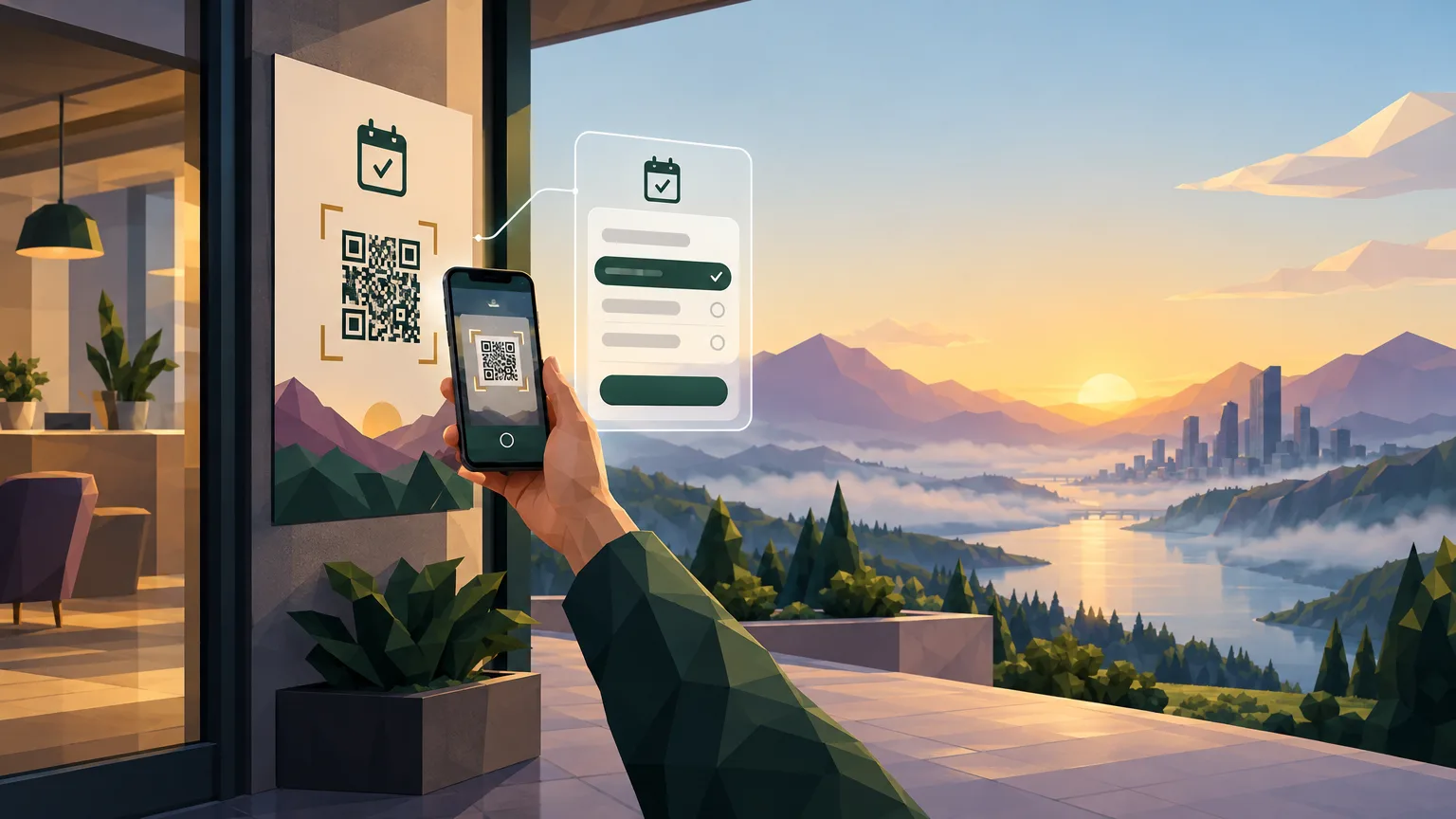
A QR code booking system leverages Quick Response (QR) codes to facilitate reservations and appointment scheduling. Instead of traditional booking steps that require manual entry or web navigation, customers can simply scan a QR code using their smartphone to access a booking interface instantly. This approach significantly reduces friction in the booking process, improving user experience and operational efficiency. QR code booking systems bridge the physical and digital worlds by enabling seamless interactions directly from printed or digital media.
Why QR Code Booking Systems Matter
For business owners and technical decision-makers, adopting a QR code booking system offers multiple advantages, including:
- Contactless interaction: Particularly vital in health-conscious or high-traffic settings, customers can book without physical contact or exchanging paperwork, supporting public health initiatives and minimizing surface transmission risks.
- Speed and convenience: QR codes provide immediate access to booking platforms, reducing wait times and simplifying navigation, which enhances customer satisfaction and can increase booking conversions.
- Data accuracy: Eliminates manual entry errors common in phone or in-person bookings, reducing administrative overhead and improving data quality for analytics and follow-up.
- Integration potential: QR code booking systems can seamlessly connect with Customer Relationship Management (CRM) tools, calendar systems, and notification engines, enabling comprehensive automation and customer engagement workflows.
- Cost-effective marketing: QR codes serve as both booking gateways and marketing tools when placed strategically in physical locations or on marketing materials, leveraging existing customer touchpoints without requiring costly app development.
- Adaptability to diverse environments: From small businesses to large enterprises, QR code systems can scale and customize to industry-specific needs such as healthcare, hospitality, and retail.
- Analytics and Insights: Tracking QR code scans provides actionable data on customer behavior, campaign effectiveness, and peak booking times, informing marketing and operational strategy.
Core Components of a QR Code Booking System
Building a robust QR code booking system involves multiple interlinked technical and operational components. Understanding each part is crucial to ensure a smooth user experience and reliable backend functionality.
- QR Code Generation and Placement: Use dynamic or static QR codes that redirect users to a booking portal or specific event/product booking page. Dynamic QR codes provide flexibility for link updates, A/B testing, and campaign tracking without reprinting codes.
- Booking Interface: A responsive web or Progressive Web App (PWA) frontend that accepts user input such as date, time, service type, and customer details. The interface must prioritize usability on mobile devices since QR code scanning primarily occurs on smartphones.
- Backend Booking Engine: Application logic handling availability, double-booking prevention, real-time scheduling, payment processing (if applicable), and data management. Popular backend frameworks include PHP/Laravel for their strong community support and well-suited features for rapid development.
- Database: A relational or NoSQL database to store bookings, user data, availability schedules, audit logs, and reporting data. Proper schema design and indexing are critical to support fast queries and maintain data integrity.
- Notification System: Integration with SMS, email, and push notification services to facilitate booking confirmations, reminders, cancellations, and updates. This helps reduce no-shows and improves customer communication.
- Admin Dashboard: A secure portal for managing bookings, viewing real-time analytics, adjusting availability, managing services and staff, and handling customer inquiries.
- Payment Gateway Integration (Optional): If prepayment or deposits are required, integrating with payment processors like Stripe, PayPal, or local gateways is essential.
- Analytics and Reporting Module: Detailed reports on booking rates, customer demographics, peak hours, cancellation rates, and QR code scan metrics support operational decision-making.
Architectural Overview and Tech Stack Considerations
Backend Technologies
PHP with Laravel remains a preferred choice for building booking engines due to its expressive syntax, well-structured MVC pattern, and rich ecosystem. Laravel's Eloquent ORM simplifies database interactions, while features like queues, events, and task scheduling enable efficient management of asynchronous operations, such as sending notifications or processing payments.
Alternatively, enterprise-level environments may consider Node.js or Python/Django, but Laravel's extensive packages for authentication, rate limiting, and validation make it an excellent fit for medium-sized businesses and startups.
Frontend Delivery
Deploy responsive frontends using frameworks like Vue.js or React. Vue integrates elegantly with Laravel blade templates or can operate independently as a Single Page Application (SPA). Key frontend priorities include mobile-first design, progressive enhancement to support varying device capabilities, and accessibility compliance.
Progressive Web Apps (PWAs) can be developed to provide offline capabilities and push notifications without app stores, increasing booking system reach.
QR Code Generation
Employ libraries such as endroid/qr-code for PHP, which support rich QR code customization like logo embedding, color schemes, and error correction levels for higher scan reliability. Alternatively, cloud services (e.g., Google Charts API or third-party SaaS QR code generators) can create dynamic codes that redirect to URLs with embedded booking parameters for tracking and personalization.
Database
MySQL and PostgreSQL are proven relational databases for booking applications, handling transactional consistency and complex queries. Use Laravel migrations to version-control schema changes. In high-load scenarios, consider read replicas and connection pooling to optimize performance. Employ database-level constraints to prevent double bookings and enforce data integrity.
Notifications and Integrations
Integrate with robust communication platforms like Twilio for SMS, SendGrid or Mailgun for emails, and Firebase Cloud Messaging (FCM) or Apple Push Notification Service (APNS) for push alerts. Laravel's notification channels abstract these providers to simplify multi-modal communications.
Implementation Example: Booking Flow Using Laravel and QR Codes
// QR code generation with endroid/qr-code in Laravel
use Endroid\QrCode\QrCode;

public function generateBookingQRCode($serviceId)
{
    $url = route('booking.form', ['service' => $serviceId]);
    $qrCode = new QrCode($url);
    $qrCode->setSize(300);
    $qrCode->setMargin(10);
    $qrCode->setEncoding('UTF-8');
    $qrCode->setErrorCorrectionLevel(\Endroid\QrCode\ErrorCorrectionLevel::HIGH);

    // Optional: Overlay logo for branding
    //$qrCode->setLogoPath(public_path('images/logo.png'));
    //$qrCode->setLogoSize(50, 50);

    $image = $qrCode->writeString();
    return response($image)->header('Content-Type', 'image/png');
}

// Booking route example
Route::get('/booking/{service}', [BookingController::class, 'showForm'])->name('booking.form');
In this extended example, we explicitly define error correction level and margin settings to improve scan stability even if part of the QR code is obscured or damaged. The commented-out logo overlay serves branding purposes, balancing aesthetics with scan reliability.
The booking form accessed via booking.form route should implement client-side and server-side validation to ensure valid input, including available dates, times within working hours, and required customer details. Backend logic must also perform concurrency checks to avoid race conditions in double-booking scenarios.
Security and Privacy Considerations
Building trust with customers and complying with regulations demand rigorous security and privacy measures:
- Enforce HTTPS: Use TLS (HTTPS) for all user-facing and API endpoints to protect data in transit, preventing interception and man-in-the-middle attacks.
- Authentication and Authorization: Protect admin dashboards and APIs with robust authentication mechanisms (e.g., OAuth2, JWT). Role-based access control (RBAC) ensures users only perform authorized actions.
- Input Validation and Sanitization: Validate all user inputs on both client and server sides to prevent XSS, SQL injection, and other injection attacks. Utilize Laravel's built-in validation features conservatively.
- Data Encryption at Rest: Encrypt sensitive fields such as personally identifiable information (PII) and payment details using database or application-level encryption.
- Audit Logging: Maintain detailed logs of booking operations, including creation, modification, and cancellation, along with user IPs and timestamps to monitor for suspicious activities.
- GDPR and Regulatory Compliance: If handling data of EU citizens or in regulated industries, implement data access, correction, and erasure workflows to comply with GDPR and related laws.
- Rate Limiting and Bot Protection: Apply throttling mechanisms to prevent abuse of booking endpoints, and implement CAPTCHA or honeypots where needed to reduce spam.
- Secure QR Code Content: Avoid encoding sensitive data directly in QR codes. Instead, encode URLs referencing secure backend resources authenticated per session.
Deployment and Scaling
Production-ready deployments require attention to scalability, availability, and maintainability:
- Containerization: Package the Laravel app with PHP-FPM in Docker containers, using an HTTP reverse proxy such as Nginx to serve HTTP traffic and handle routing for Application Load Balancers (ALB).
- Load Balancing: Use AWS Application Load Balancer (ALB) or similar to distribute incoming traffic across multiple web instances. ALB targets should be HTTP endpoints (e.g., Nginx), not PHP-FPM directly.
- Auto-Scaling: Implement auto-scaling policies based on CPU, memory, or custom booking load metrics to accommodate peak periods, ensuring responsiveness.
- Database High Availability: Configure database replicas, failover mechanisms, and regular backups to maintain data resilience against outages or corruption.
- Caching: Use Redis or Memcached to cache frequently accessed data such as availability calendars, reducing database load.
- CI/CD Pipelines: Automate testing, linting, and deployment steps to maintain code quality and accelerate release cycles.
- Monitoring and Alerting: Deploy infrastructure and application monitoring tools (e.g., Prometheus, Datadog, New Relic) to track system health, detect anomalies, and alert operations teams timely.
Assumptions for deployment pricing and scaling models include:
- Region: AWS US East (N. Virginia) or equivalent cloud region.
- Steady workload with peak bursts during business hours.
- 99.9% uptime SLA targeting redundancy via availability zones.
- Traffic volume: Moderate, with thousands of daily bookings.
- Data transfer: Mostly inbound requests; outbound notifications via third-party SMS/email services not included.
- Excluded: Third-party service fees (e.g., Twilio, SendGrid), storage costs outside database snapshots.
Use Case Scenarios
QR code booking systems provide versatile solutions applicable across various industries:
- Restaurants: QR codes placed on tables or menus allow customers to reserve seating, view waitlists, or pre-order meals, streamlining service and reducing staff workload.
- Healthcare: Clinics and hospitals can offer QR codes for quick appointment scheduling upon entering facilities, bypassing crowded reception desks and reducing wait times.
- Events and Entertainment: On-site or flyer-based QR codes enable instant ticket booking or seat selection, improving attendee experience and providing valuable attendance analytics.
- Services & Retail: Hair salons, automotive service centers, government offices, and other appointment-based businesses use QR codes to simplify scheduling, reduce walk-in traffic, and automated check-ins.
- Transportation and Logistics: QR codes can be used for scheduling freight pickups or driver dispatches efficiently.
Comparing QR Code Booking Systems to Traditional Online Booking
| Criteria | QR Code Booking System | Traditional Online Booking |
|---|---|---|
| User Access | Instant access via QR scan; no URL typing required, reducing friction and errors. | Requires manual URL entry or search, which may lead to incorrect URL or user drop-off. |
| Contactless | Fully contactless with QR codes embedded on flyers, tables, posters, and product displays. | Contactless but less physical integration options; mostly web-based access. |
| Marketing Integration | QR codes directly integrate with physical marketing materials, enabling offline-to-online conversions. | Primarily promotion via online digital marketing channels such as websites, email, and social media. |
| Technical Complexity | Requires QR code generation, dynamic redirection logic, and mobile-friendly UI development. | Simpler URL-based systems but depend on user to discover and engage. |
| Device Compatibility | Dependent on QR scanner availability on consumer devices; modern smartphones natively support scanning. | Accessible on any browser or device with internet connectivity. |
| Scalability | Scales well with integrated dynamic QR codes allowing flexible content targeting. | Scaling relies more on web server and hosting infrastructure; no medium-specific considerations. |
| User Experience | Direct entry points reduce navigation steps, enhancing speed and reducing abandoned bookings. | May require visitors to find and navigate the website, introducing additional steps. |
Common Challenges and Solutions
- Challenge: QR codes become outdated or broken links.
Solution: Use dynamic QR codes with redirect URLs that can be updated without changing the printed code. Implement monitoring to detect link failures. - Challenge: User confusion in scanning or booking.
Solution: Provide clear signage and instructions near QR codes; design intuitive, mobile-optimized booking flows with helpful tooltips and validation feedback. - Challenge: Managing no-shows or last-minute changes.
Solution: Integrate real-time notifications, cancellation policies, and allow easy rescheduling within booking interfaces to encourage customer responsibility and reduce downtime. - Challenge: Accessibility for users without smartphones or QR scanning capability.
>
Solution: Provide alternative booking methods such as short URLs, NFC tags, or manual phone-based options to accommodate diverse user needs. - Challenge: Ensuring booking data consistency under concurrent bookings.
Solution: Use database transactions and optimistic locking to prevent double bookings and race conditions.
Future Trends
Looking ahead, QR code booking systems will increasingly integrate with emerging technologies to further enhance customer engagement and operational automation:
- AI-Powered Chatbots: Conversational interfaces accessible after QR scans can offer personalized recommendations, answer FAQs, and guide users through complex booking processes.
- Personalized Offers: Dynamic QR codes linked to user profiles or CRM data can present targeted promotions or discounts at scan time.
- Voice Assistant Integration: Coupling QR codes with voice commands enables hands-free booking experiences for accessibility-impaired users or multitasking customers.
- Blockchain Verification: For high-security bookings (e.g., access control), QR codes might encode blockchain-based verification tokens to prevent fraud.
- Augmented Reality (AR): Enhanced with AR overlays, scanned codes can display virtual guides or dynamic content related to the booking context.
FAQ
Can I use QR codes for booking without a mobile app? Yes, QR codes typically lead to responsive web booking interfaces accessible via smartphone browsers, requiring no app installation. This maximizes accessibility and reduces barriers to usage. How do I update my QR codes if booking URLs change? Use dynamic QR codes that redirect users via an updatable intermediate URL. This design enables modifications to the booking destination without changing the physical QR code, saving costs and effort. Is a QR code booking system secure? If implemented with industry best practices such as HTTPS, secure authentication, input sanitization, and secure databases, these systems are secure for handling customer data. Security should remain an ongoing priority, including regular audits and patching. What are common hurdles in QR code adoption? Customer unfamiliarity, broken links, poor interface design, and device compatibility issues can hinder adoption. Clear instructions, rigorous testing, and user-friendly design mitigate these challenges. Can QR code booking systems handle payments? Yes, you can integrate secure payment gateways into the booking flow to allow deposits or full payments. Ensure PCI-DSS compliance and use tokenization to protect payment details. How to prevent double booking? Implement transaction-safe booking logic with database-level locking or optimistic concurrency controls. Validate availability just before confirming the booking.Conclusion
QR code booking systems represent an efficient, customer-friendly approach to appointment and reservation management. They uniquely connect physical touchpoints with powerful digital workflows, enhancing both customer experience and operational performance.
For technical teams, leveraging frameworks like Laravel combined with reliable QR code generation libraries enables rapid and robust solutions tailored to specific business requirements. From secure booking backends and scalable infrastructure to intuitive frontends optimized for mobile devices, QR code booking systems can be tailored to diverse use cases.
Business decision-makers stand to benefit from improved operational efficiency, reduced no-shows, better customer data insights, and enhanced marketing integration. Whether in healthcare, hospitality, retail, or entertainment, QR code booking systems provide a modernized, seamless interface to customer engagement.
To explore custom PHP and Laravel development tailored to your QR code booking needs, visit our Custom PHP Development services or connect with us through our contact page. Our team is ready to help you leverage QR technology to streamline your bookings and elevate customer satisfaction.