Understanding Custom Infrastructure
Custom infrastructure is the tailored technical foundation purpose-built to fulfill a specific business's software, operational, and integration requisites. Unlike generic off-the-shelf software solutions, which are pre-designed for mass use and can impose constraints on workflows, custom infrastructure is engineered from the ground up or heavily adapted. This ensures seamless alignment with unique business processes, improved scalability, and the integration of specialized technologies.
Developing custom infrastructure involves carefully selecting technologies, architectural patterns, deployment strategies, and security protocols to meet long-term operational goals. It underpins the software applications and services that drive business value, determining performance, reliability, adaptability, and compliance readiness.
Why Businesses Outgrow Off-the-Shelf Software
Many enterprises initially adopt widely available commercial software due to its rapid deployment, perceived cost savings, and ease of use. Nevertheless, as business complexity increases, the limitations of off-the-shelf software become more evident. These limitations include:
- Lack of Flexibility: Boxed software products usually support standard workflows but cannot be customized deeply without extensive workarounds or external add-ons that add complexity and fragility.
- Scalability Constraints: Although some commercial platforms advertise scalability, many struggle to maintain performance under high data volumes or user concurrency without costly license upgrades or infrastructure overhauls.
- Integration Challenges: Off-the-shelf solutions often rely on specific APIs or data exchange standards. When businesses require connections to legacy systems, proprietary APIs, or specialized services, integration can be technically difficult or sometimes impossible.
- Cost Over Time: While upfront costs may appear minimal, licensing fees, per-user charges, and additional module costs can accumulate substantially with growth, resulting in escalating total cost of ownership (TCO).
- Operational Risk: Vendors may discontinue products or change roadmaps, exposing businesses to disruption risks and migration challenges.
When to Consider Custom Infrastructure
Deciding to build custom infrastructure requires assessing both business needs and technical feasibility. Several key indicators making custom development a strategic choice include:
- Core Business Processes Are Unique: When business workflows or logic cannot be efficiently modeled with generic software without significant compromise or manual effort.
- Performance and Responsiveness Matter: High-frequency transactions, real-time analytics, or applications demanding low latency benefit from infrastructure optimized to their specific workload characteristics.
- Data Privacy and Compliance: Industries such as healthcare, finance, and government require strict controls over data residency, auditing, encryption, and handling. Custom infrastructure allows bespoke compliance enforcement.
- Integration Is Critical: For organizations with diverse toolsets or legacy systems, seamless interoperability through standardized APIs or specifically crafted connectors is essential.
- Long-Term Cost Efficiency: Although initial investment is higher, custom solutions can eliminate recurring license fees and enable operational efficiencies through automation, reducing overall costs.
- Competitive Advantage via Innovation: Owning the software stack enables rapid feature iteration, experimentation, and differentiation difficult to achieve with vendor lock-in.
Laravel and Custom Infrastructure: A Strategic Match
Laravel, a contemporary PHP framework, offers an excellent foundation for building such custom infrastructure due to its expressive syntax, modularity, and expansive ecosystem. Its technical benefits include:
- Modular MVC Architecture: Clear separation between data models, views, and controllers facilitates maintainable, testable codebases suited for scalable projects.
- Powerful ORM (Eloquent): Expresses database relationships and queries naturally, simplifying complex data manipulations while mitigating SQL injection risks.
- Task Scheduling and Queues: Built-in scheduler and queue system provide mechanisms for deferred and background job processing, essential for workload balancing and batch operations.
- Rich Authentication and Authorization: Supports secure user identity management with fine-grained access control, critical in sensitive applications.
- API Resources and Rate Limiting: Facilitates RESTful API development, complete with JSON serialization, transformations, and throttling controls for robust integrations.
- Broad Package Ecosystem: Availability of reusable Laravel packages accelerates development and reduces duplicate effort for common functionalities.
- Testing Utilities: Integrated PHPUnit support encourages test-driven development (TDD), enhancing reliability.
Laravel's alignment with modern DevOps practices, containerization compatibility, and cloud readiness make it a strong candidate for extensible custom infrastructure initiatives.
Production Example: TheAppWizards.com and Custom Laravel Infrastructure
An illustrative example of Laravel-based custom infrastructure is found in the work done at TheAppWizards.com. Custom PHP Design collaborated with TheAppWizards to create a Laravel-powered backend architecture focused on intricate business workflows and integration needs. Key engineering insights from this implementation include:
- Automation of Essential Business Logic: Custom job scheduling combined with Laravel queues processed workflows with minimal latency and error incidence, removing bottlenecks encountered with previous manual handling.
- Flexible Workflow Engine: The infrastructure allowed dynamic creation and modification of business rules using configuration-driven models, providing agility as client requirements evolved.
- Security and Compliance by Design: Data encryption at rest and in transit, granular role-based access, and audit logging were embedded, supporting regulatory compliance demands.
- Multi-API Integration: A suite of Laravel API clients and middleware enabled connecting with diverse third-party platforms, enriched by detailed monitoring and error handling.
- Containerized Deployment: Use of Docker with PHP 8.4-fpm-alpine images ensured a consistent production environment, facilitating continuous delivery through automated pipelines.
This example illustrates how Laravel serves as a robust framework to architect custom infrastructure geared toward complex, high-value business applications.
Architectural Considerations for Custom Infrastructure
Developing custom infrastructure demands deliberate choices aligned with business goals, technical constraints, and operational policies.
- Cloud vs. On-Premises: Decision depends on data sovereignty laws, latency tolerance, and cost sensitivity. Cloud offers elasticity and managed services; on-premises provides full control and reduced external dependencies.
- Containerization and Orchestration: Using
Dockerwithphp:8.4-fpm-alpineimages containerizes PHP applications for portability and isolation. Orchestration platforms like Kubernetes or AWS ECS enable automated scaling, health management, and rolling updates. - Load Balancing and Reverse Proxies: Because PHP-FPM does not directly handle HTTP, deploying Nginx or Apache as reverse proxies is necessary to interface with Application Load Balancers (ALB).
- CI/CD Pipelines: Automating code testing, container builds, vulnerability scans, and deployment reduces human errors and accelerates release cycles.
- Monitoring and Logging: Integrations with Prometheus, Grafana, ELK stack, or cloud-native tools deliver real-time observability, enabling proactive issue detection and capacity planning.
- Security Best Practices: Implement TLS encryption, secure credential storage (e.g., AWS Secrets Manager), regular patching, and vulnerability scans. Adopt least privilege for access and employ Web Application Firewalls where applicable.
- Disaster Recovery and Redundancy: Architect for multi-availability zone deployments and regular backups, ensuring data durability and business continuity.
- Compliance Controls: Embed mechanisms for traceability, role-based audits, and data residency compliance, guided by frameworks such as HIPAA or GDPR as appropriate.
Transparent Assumptions in Development and Cost
Accurate planning requires clear assumptions on environmental and operational parameters:
- Region and Environment: Cloud regions vary in service availability, latency, and pricing. Choose regions close to user base and compliant with data regulations.
- Workload Characteristics: Estimate average requests per second, peak usage, and data throughput to dimension CPU, memory, and storage, and to configure auto-scaling policies.
- Uptime and Redundancy: Define Service Level Agreements (SLA) for availability. Architect fault tolerance through load balancers, redundant instances, and failover strategies.
- Data Transfer and Networking: Anticipate cross-zone data transfer costs and bandwidth needs. Utilize Virtual Private Clouds (VPC) and subnets to isolate traffic flows.
- Excluded Services: Budget estimates usually exclude third-party services like analytics, CDNs, or commercial APIs to maintain clarity on core infrastructure expenses.
For precise budgeting and capacity planning, tools like AWS Pricing Calculator or equivalent from other providers should be employed, inputting specific workloads, regions, and service tiers.
Comparison of Custom Infrastructure Approaches
| Criteria | Off-the-Shelf Software | Custom Infrastructure (Laravel-based) |
|---|---|---|
| Flexibility | Limited to vendor features and APIs | Highly adaptable to unique workflows and integrations |
| Scalability | Potentially constrained; costly upgrades | Scalable by design with extensible architecture |
| Integration | Restricted to supported connectors | Custom APIs and connectors tailored to business needs |
| Cost Model | Upfront plus recurring license and user fees | Higher initial investment, lower ongoing fees |
| Security | Depends on vendor policies | Custom policies with full control and compliance integration |
| Time to Market | Fast deployment | Longer development cycle |
| Control Over Roadmap | Limited to vendor updates | Full control enabling rapid innovation |
Implementation Details and Sample Laravel Dockerfile
To illustrate part of a production-ready Laravel custom infrastructure, here is a sample Dockerfile snippet showcasing best practices:
FROM php:8.4-fpm-alpine

# Install system dependencies and PHP extensions required for Laravel
RUN apk add --no-cache \
    oniguruma-dev \
    libxml2-dev \
    zip \
    unzip \
    curl \
  && docker-php-ext-install pdo_mysql mbstring xml zip

# Install Composer
COPY --from=composer:latest /usr/bin/composer /usr/bin/composer

# Set working directory
WORKDIR /var/www/html

# Copy existing application files
COPY . /var/www/html

# Install Composer dependencies in production mode
RUN composer install --optimize-autoloader --no-dev

# Set file permissions
RUN chown -R www-data:www-data /var/www/html/storage /var/www/html/bootstrap/cache

# Expose port 9000 for PHP-FPM
EXPOSE 9000

CMD ["php-fpm"]
This example excludes the HTTP reverse proxy layer such as Nginx, which would be configured separately to listen on port 80 or 443 and forward requests to PHP-FPM on port 9000, enabling Application Load Balancer compatibility.
Security and Operations Context
Security in custom infrastructure requires continuous vigilance and integration into every development and deployment stage. Key best practices include:
- Adopting secure coding practices and conducting regular code reviews and static analysis.
- Enforcing strong authentication and authorization, including multi-factor authentication (MFA) where possible.
- Using encrypted communication protocols (HTTPS/TLS) for all client-server and server-server data exchange.
- Implementing intrusion detection and prevention systems alongside regular vulnerability scanning.
- Ensuring logging captures sufficient detail for audit and forensic analysis without exposing sensitive data.
- Maintaining patching schedules to eliminate known vulnerabilities in OS, PHP, libraries, and dependencies.
- Planning incident response and disaster recovery scenarios with documented procedures and regular testing.
Frequently Asked Questions (FAQ)
What is the typical timeframe for building custom infrastructure with Laravel?
Timelines vary widely depending on project scope and complexity. MVP (minimum viable product) projects can occasionally be delivered within 3-6 months, while comprehensive enterprise systems often require 9-12 months or more. Effective project management and clear requirements accelerate delivery.
Can I migrate from off-the-shelf to custom infrastructure incrementally?
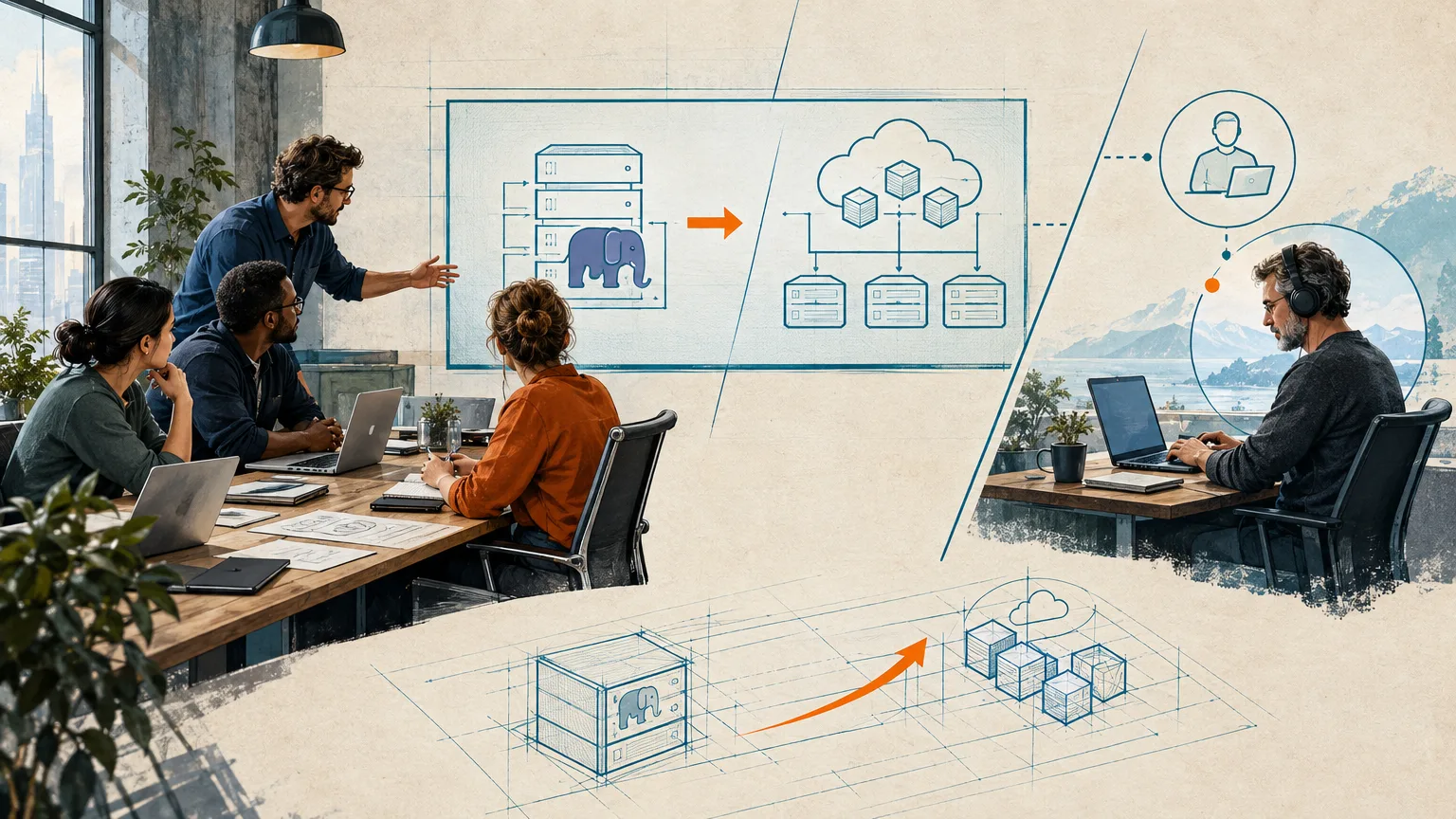
Yes, a common strategy is a phased migration. Starting with critical or high-impact modules reduces risk while maintaining operational continuity. API gateways and middleware can bridge legacy and new systems during transition.
How does custom infrastructure affect application security?
Custom infrastructure allows fine-grained security tailored exactly to organizational policies, supporting controls off-the-shelf software may not offer. However, this requires experienced developers and administrators to design, implement, and maintain security effectively.
Is Laravel suitable for all kinds of custom infrastructure needs?
Laravel excels in developing web applications, RESTful APIs, and backend services. For specialized domains like high-throughput streaming or intensive machine learning workloads, Laravel may need to be combined with other technologies specifically tailored for those tasks.
How do I ensure my custom infrastructure remains maintainable?
Employ coding standards, modular design, extensive automated testing, continuous integration, and thorough documentation. Regular refactoring and upskilling ensure code quality and team capability keep pace with evolving requirements.
Conclusion and Next Steps
Custom infrastructure is a strategic investment for organizations seeking scalable, flexible, and secure technology foundations uniquely aligned with their business. Laravel offers a compelling ecosystem and proven technical capabilities facilitating such developments with agility and maintainability.
Companies contemplating this path should conduct thorough needs analysis and collaborate with experienced development teams to architect solutions balancing functionality, cost, and operational complexity. Custom PHP Design's expertise manifested in projects like those at TheAppWizards.com illustrates the tangible benefits of well-engineered custom infrastructure.
To explore how custom infrastructure powered by Laravel can transform your organization’s technology landscape, contact Custom PHP Design to discuss your tailored requirements and feasible solutions.