Introduction
Taking over a legacy PHP project can be a challenging task for business owners and technical decision-makers alike. Legacy PHP applications, often built with outdated practices, inconsistent codebases, and poor documentation, require a careful approach to ensure smooth transition, maintainability, and scalability. This guide provides a practical roadmap for managing the takeover process, assessing the existing system, planning upgrades, and mitigating risks.
Understanding Legacy PHP Projects
Legacy PHP projects refer to PHP applications that have been maintained over several years with minimal modernization and often lack current best practices such as usage of modern frameworks, appropriate security standards, and automation. These projects might include:
- Procedural codebases with minimal or no use of frameworks
- Outdated PHP versions (typically prior to 7.x)
- Limited or no automated testing
- Complex and undocumented business logic embedded in code
- Monolithic architecture
- Hardcoded configuration and environment settings
- Ad-hoc patching practices that hinder maintainability
Commercial Rationale for Taking Over Legacy PHP Projects
Business owners often face scenarios where taking over such projects becomes inevitable—whether due to staff turnover, vendor contract termination, or acquisition. Properly managing the takeover reduces risks associated with downtime, security vulnerabilities, and lost business opportunities. Key business objectives include:
- Ensuring continuous operation of critical business applications
- Improving maintainability and adaptability for future growth
- Reducing technical debt and operational costs
- Supporting feature enhancements and integrations with modern systems
- Protecting intellectual property and proprietary business logic embedded in legacy code
- Mitigating risks from outdated security practices or unsupported PHP versions
Phase 1: Assessment and Discovery
1. Source Code and Version Control Audit
Start by obtaining full access to the project’s source code repository. Verify which PHP version it targets and the dependency management strategy (e.g., Composer). Evaluate branch history for activity signals. Lack of version control or sporadic commits indicate risky technical debt which must be addressed early.
Identify code ownership and modularity. Are certain modules more critical or fragile? Note external dependencies, including legacy libraries or APIs that might be deprecated. This helps in planning refactoring and integration efforts.
2. Documentation and Knowledge Transfer
Review all existing documentation including system architecture diagrams, API specifications, deployment guides, and user manuals. As legacy projects often suffer from poor or outdated documentation, schedule knowledge transfer interviews with previous developers or key business stakeholders if possible. This helps uncover hidden assumptions about how features work or edge cases.
If documentation is scarce, use automated code analysis tools like PHP Depend or PhpMetrics to visualize code complexity and dependencies. Additionally, reverse engineer workflows via functional tests or by running the application in a controlled environment to better understand business logic.
3. Infrastructure and Hosting Environment Review
Map out the entire infrastructure stack, including web servers (Apache, Nginx), PHP runtime (PHP-FPM, mod_php), database servers (MySQL, PostgreSQL, or others), caching layers (Redis, Memcached), message brokers, and CDN configurations. Pay close attention to security configurations including SSL/TLS certificates, firewall rules, and user permissions.
Review deployment processes and environments (development, staging, production). Are deployments manual or automated? Identify backup schedules and disaster recovery mechanisms, as these impact operational resilience.
4. Security and Compliance Scan
Conduct initial security assessments using static analysis tools such as SonarQube or PHPStan with security plugins to detect potential vulnerabilities like SQL injection, cross-site scripting (XSS), insecure file uploads, and outdated third-party libraries. Combine this with dynamic scans using tools like OWASP ZAP.
Ensure compliance with regulatory standards relevant to your business, such as GDPR for European users, HIPAA for healthcare data, or PCI-DSS for payment data. Identify any compliance gaps and areas requiring immediate remediation.
5. Performance Baseline and Monitoring Review
Assess current application performance using profiling tools such as Blackfire or Xdebug. Review existing monitoring and alerting systems to understand response times, error rates, and resource utilization baselines. This information supports prioritizing hotspots during refactoring.
Phase 2: Stabilization and Immediate Improvements
1. Establish Source Control and Continuous Integration
If version control is lacking or poorly managed, consolidate the project into a Git repository with proper branching strategies such as GitFlow or trunk-based development. Configure continuous integration tools like GitHub Actions, GitLab CI, or Jenkins to run automated builds and tests, reducing human error.
Integrate static code analysis and security scans into the CI pipeline to enforce coding standards and detect regressions early.
2. PHP Version Upgrade with Compatibility Testing
Plan to upgrade PHP versions incrementally if the current version is significantly outdated, for instance PHP 5.x to 8.4. Use compatibility analysis tools like Rector or PHP Migration Toolkit to identify deprecated features or incompatible constructs.
Perform thorough testing in staging environments to validate application behavior after each upgrade step. Automation using unit and integration tests becomes critical here.
3. Build Automated Tests
Begin with creating basic smoke tests to verify core application flows are functional post-deployment. Gradually increase coverage with unit tests (PHPUnit) and end-to-end tests (Codeception, Behat). Automated tests are invaluable during refactoring and upgrades to prevent regressions.
4. Apply Security Patches and Hardening
Remediate any critical security issues uncovered in the assessment phase immediately. This might include upgrading vulnerable dependencies, introducing parameterized SQL queries to avoid injection, sanitizing user input, and enforcing HTTPS across all endpoints.
Consider deploying Web Application Firewalls (WAF) or runtime application self-protection (RASP) tools to augment security layers as interim measures.
5. Establish Configuration Management
Extract hardcoded values such as database credentials, API keys, or environment-specific parameters into configurable environment files (.env) or centralized configuration management solutions. This increases portability and reduces accidental misconfiguration.
Phase 3: Modernization and Refactoring
1. Modularization and Code Refactoring
Decompose monolithic application components into smaller, purpose-driven modules or services. Refactor code adhering to SOLID principles for better maintainability and extensibility. Modern PHP features such as typed properties, anonymous classes, attributes, and union types improve code clarity and safety.
Introduce Dependency Injection containers for managing object creation and promote loose coupling.
2. Framework Adoption and Incremental Migration
Integrate modern frameworks like Laravel or Symfony incrementally rather than full rewrites. For example, routing and middleware can be gradually migrated to Laravel components, protecting existing business logic while upgrading infrastructure. This strategy was effectively applied in the modernization of legacy projects collaborating with theAppWizards.com, where legacy code bases were wrapped within Laravel’s ecosystem to leverage enhanced security, standardized ORM (Eloquent), and community packages.
This approach minimizes downtime and allows phased feature upgrades aligned with business priorities.
3. Database Schema and Query Optimization
Review database schemas for normalization issues, missing indexes, or inefficient queries. Employ tools like EXPLAIN plans or query profilers to detect bottlenecks. Consider migrating to managed cloud databases (Amazon RDS, Azure SQL) for improved redundancy, automated backups, and scaling.
Evaluate the need for database refactoring, and carefully plan migrations to avoid service disruption. Data integrity and migration rollback plans are essential safeguards.
4. DevOps and Automation Integration
Automate build, test, and deployment pipelines with tools like Docker (using PHP 8.4-fpm-alpine base images), Kubernetes orchestration, and Terraform for infrastructure-as-code. Containerization isolates dependencies and standardizes runtime environments, reducing "works on my machine" problems.
Implement centralized log management and monitoring (e.g., ELK stack, Datadog) to gain insights into production performance and operational health.
5. Security Hardenings and Monitoring
Enable advanced security measures such as Content Security Policy headers, HTTP Strict Transport Security (HSTS), and rate limiting. Conduct periodic penetration testing and code audits. Implement tools for runtime application security monitoring to detect anomalies in live environments.
Phase 4: Integration and Future-Proofing
1. API Development for Extensibility
Expose essential business domain functionalities through well-documented RESTful or GraphQL APIs. This facilitates integration with mobile applications, third-party services, or internal microservices platforms. API versioning strategies allow backward compatibility for client applications.
2. Cloud Migration and Scalability Planning
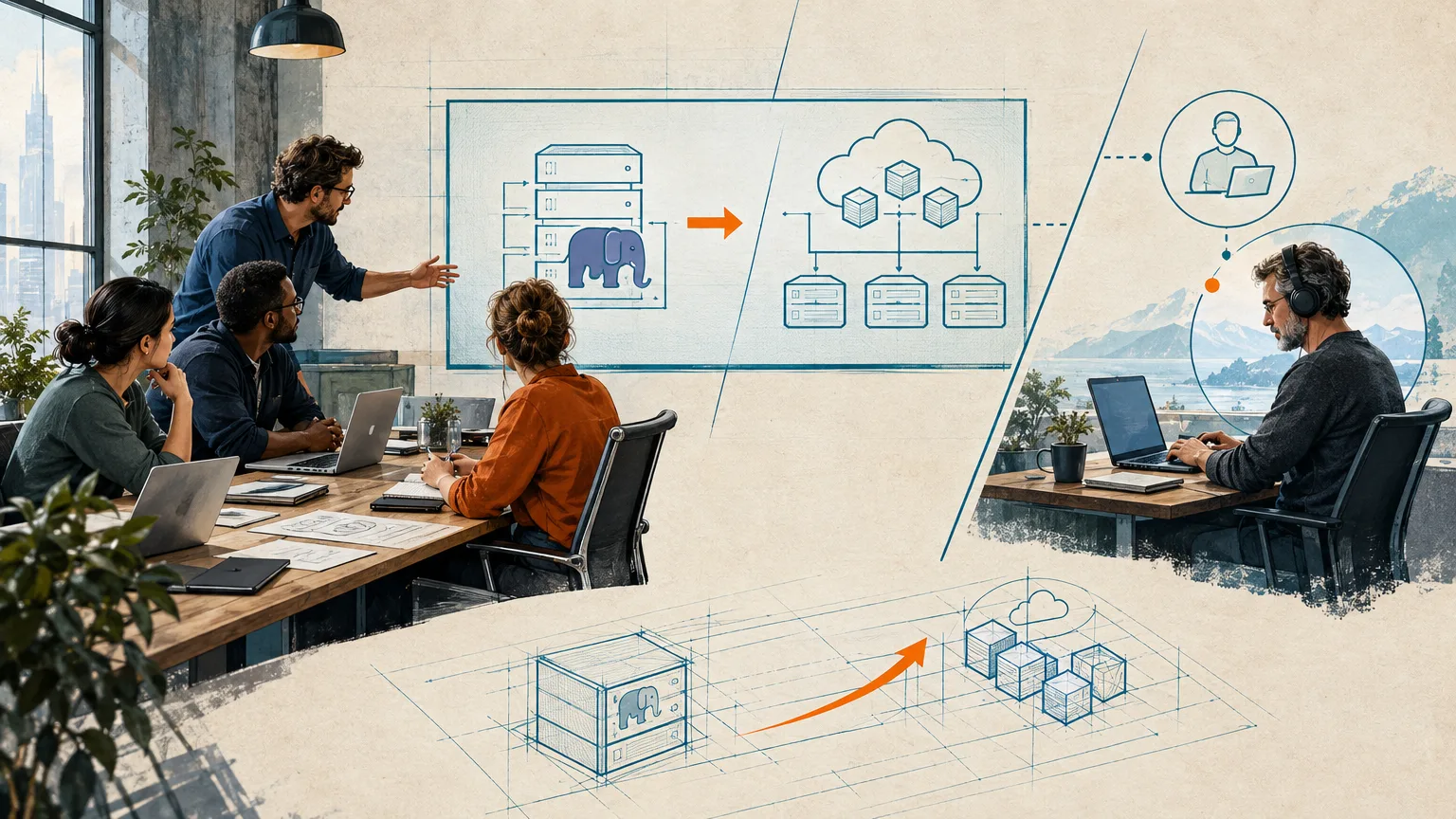
Evaluate transitioning the hosting infrastructure to cloud platforms such as AWS, Azure, or Google Cloud. Incorporate autoscaling groups and load balancing mechanisms—such as an Application Load Balancer fronting an Nginx reverse proxy with PHP-FPM containers for the application layer. Kubernetes clusters managed by EKS or AKS provide orchestration and resilience.
Design for high availability with multi-AZ deployments, redundancy, and disaster recovery plans. Consider cost implications by analyzing workload patterns, data transfer, and idle resources.
3. Legacy Code Decommissioning and Archival
Plan a staged retirement strategy for legacy components no longer needed. Maintain archival copies with comprehensive documentation for audit and compliance purposes. Monitor dependencies to ensure no active usage before decommissioning.
4. Continuous Improvement and Documentation
Establish a culture of continuous codebase improvements backed by up-to-date documentation, coding standards enforcement, and regular technical debt assessments. Foster knowledge sharing and developer onboarding processes to prevent the recurrence of legacy pitfalls.
Example Case: theAppWizards.com Legacy Project Transition
Custom PHP Design has collaborated with theAppWizards.com to take over and modernize several legacy PHP projects. The process involved detailed code audits, introducing Laravel for improved structure, and establishing automated CI/CD pipelines to accelerate releases. For instance, one project initially lacked any automated tests or version control; our team implemented Git repositories with branch protection and set up pipelines using GitHub Actions to automate testing and deployment.
TheAppWizards.com’s project benefitted from embracing Laravel’s standardized routing and Eloquent ORM, which significantly reduced fragile custom database queries. Incremental refactoring allowed the business to continuously operate without downtime, while technical debt was systematically reduced. The partnership exemplifies how careful legacy modernization aligns with business goals and fosters maintainable growth.
Frequently Asked Questions (FAQ)
Q1: How long does it typically take to take over a legacy PHP project?
The duration varies widely based on project size and complexity, code quality, and availability of documentation. An initial assessment can take 2–4 weeks, providing clarity on the upgrade scope. Full modernization efforts often span several months and are best conducted in phases to maintain operational continuity.
Q2: Is it always necessary to rewrite the entire legacy PHP application?
No. A full rewrite carries significant risk and cost. Often, incremental refactoring combined with framework adoption offers a higher return on investment with less disruption. Rewrites are recommended primarily when architecture or code quality is irreparably poor.
Q3: What PHP version should I upgrade to when taking over a legacy project?
Upgrading to PHP 8.4 or newer is strongly recommended to leverage performance enhancements, security features, and language improvements. PHP 8.4's latest features can boost developer productivity and code safety. Compatibility checks should precede any upgrade to identify deprecated functions or incompatibilities.
Q4: Can we migrate a legacy PHP project to a SaaS or cloud-native model?
Yes. With proper modularization and API-driven design, legacy projects can be transitioned to cloud-native or SaaS architectures. This includes containerization, microservices, and managed cloud services that improve scalability, reliability, and ease of maintenance.
Q5: What common risks should I be aware of when taking over a legacy PHP project?
- Hidden security vulnerabilities due to outdated code
- Undocumented business logic causing feature regressions
- Incompatibilities with modern PHP versions or libraries
- Operational challenges from lacking automated tests and deployment pipelines
- Performance degradation from inefficient queries or resource constraints
- Unexpected costs or downtime during modernization if not carefully planned
Comparison Table: Key Considerations for Legacy PHP Project Takeover
| Criteria | Minimal Effort (Short-term Focus) | Moderate Effort (Incremental Modernization) | Full Rewrite (Long-term Investment) |
|---|---|---|---|
| Risk | Low immediate risk, but technical debt accumulates | Balanced risk with manageable phases | High risk of disruption and cost overruns |
| Cost | Lower upfront cost | Moderate cost spread over time | High upfront investment |
| Time to Value | Fastest short-term results | Steady improvements with iterative gains | Delayed value realization until completion |
| Maintainability | Limited improvements; fragile code endures | Improved maintainability over time | Significantly improved maintainability post completion |
| Compatibility with Modern Standards | Partial compatibility | Progressive adoption of modern PHP versions and frameworks | Full compatibility and clean architecture |
| Operational Overhead | Manual deployments and monitoring | Automated CI/CD and monitoring integration | Industry best practices with DevOps pipeline |
Conclusion
Taking over and modernizing legacy PHP projects requires a methodical, technically sound approach balancing business continuity with modernization. By following the outlined assessment, stabilization, and modernization phases, organizations can reduce technical debt, improve security, and position their applications for future growth.
Collaborating with experienced partners—such as those behind theAppWizards.com—can facilitate this transition with minimal disruption while leveraging modern PHP ecosystems for sustainable competitive advantage.
If you are considering legacy PHP project takeover or modernization, contact our expert team for a consultation tailored to your needs.